


A New Direction for “Replacing Humans with Machines”—Collaborative Robots to Account for 30%
2022-03-21
The emergence of collaborative robots has given rise to a new model of industrial automation. Traditionally, deploying industrial robots has required substantial capital investment, teams of engineering and programming experts, and delivery cycles lasting several months. Large-scale deployment of industrial robots can take years and cost tens of millions of dollars to complete. And that’s not even factoring in the ongoing costs of maintenance, programming, and technical support.
How collaborative robots are expanding automation
cooperation Make a robot By changing this, it offers manufacturers a viable alternative—a modern, human-centered automation paradigm that replaces the traditional, complex, costly, and time-consuming “all-or-nothing” automation approach. These robots can be applied across numerous industries, such as electronics manufacturing, metal fabrication, and more. Compared to conventional robots, collaborative robots are cheaper and easier to deploy—even by individuals with no prior experience in robotics installation—thus expanding the adoption of automation to a greater number of small- and medium-sized enterprises.
Unlike traditional robots, collaborative robots can safely operate alongside humans in the same workspace without requiring extensive safety measures—though a risk assessment is still essential. In most industrial and manufacturing environments, collaborative robots’ compact footprint, built-in safety features, and ability to be deployed without cages significantly enhance their appeal, driving their rapid global growth.
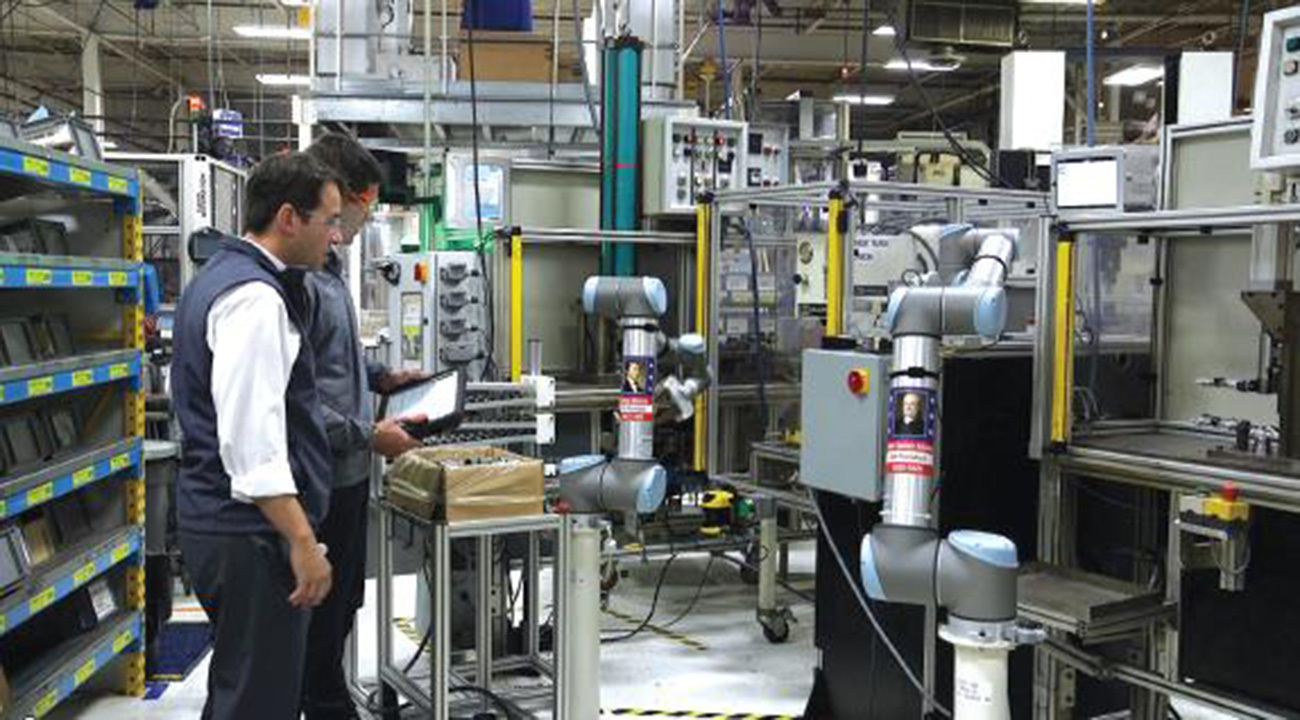
Figure 1: The operations manager of a factory said, “Collaborative robots have brought us growth and expansion, created more job opportunities, and enabled us to redirect our most valuable resources toward new projects that most urgently need technology. If we had relied solely on hiring new employees, we would never have been able to triple our scale.” The UR10 collaborative robot is responsible for machine maintenance, assembly, and product inspection. Image source: Universal Robots.
Collaborative robots can be deployed in close proximity to humans without the need for special fencing (following a risk assessment), and they are easy to program. They can also take over repetitive, heavy-duty tasks—tasks that would otherwise cause stress and injury to workers—thereby bringing significant improvements to ergonomics in existing work environments. This allows human workers to focus on higher-value tasks. Compared to manually performed tasks, collaborative robots also offer 24/7 availability and consistent performance, thereby enhancing both quality and efficiency.
The shortage of available labor is a long-term challenge facing the manufacturing sector, and the COVID-19 pandemic has exacerbated this challenge. In December 2020, in a survey conducted by the National Association of Manufacturers (NAM), 62.4% of respondents identified attracting and retaining a highly skilled workforce as their primary business challenge.
For manufacturers, collaborative robots represent an effective solution to address these labor shortages. Even in situations where the labor market is tight, collaborative robots can help boost production and throughput while improving quality. As it’s becoming increasingly difficult to find suitable workers for tasks such as material handling, welding, small-part assembly, CNC machine maintenance, and welding itself, collaborative robots have begun to fill this gap.
According to data from the International Federation of Robotics (IFR), collaborative robots represent the fastest-growing segment in the industrial robotics field. According to a report by market analysis firm BIS Research, the global collaborative robot market was valued at approximately US$674.9 million in 2020 and is projected to grow at a compound annual growth rate (CAGR) of 28% by 2025. Similarly, Emergen Research forecasts that sales of collaborative robots will surge from around US$700 million in 2019 to US$9.3 billion by 2027.
Early adopters of collaborative robotics technology have come up with a new idea: automation can be safely deployed in environments where humans are present; automation can be programmed and deployed by manufacturing personnel rather than by industrial robotics experts; and automation can be introduced without requiring large-scale changes to existing factory layouts—this is particularly valuable for smaller companies.
Key factors driving the successful adoption of collaborative robots
So far, early adopters of collaborative robots have proven to be spot on. Collaborative robots have demonstrated their practicality in tens of thousands of successful deployments across industries such as automotive, manufacturing, pharmaceuticals, and electronics—and are being applied to a wide variety of tasks, including machine maintenance, assembly, finishing, inspection, packaging, and palletizing. Today, collaborative robots account for approximately 5% of the global industrial robot market; according to research by Interact Analysis, this share is projected to rise to around 30% by 2027. To drive the successful adoption of collaborative robots, consider the following seven key factors.
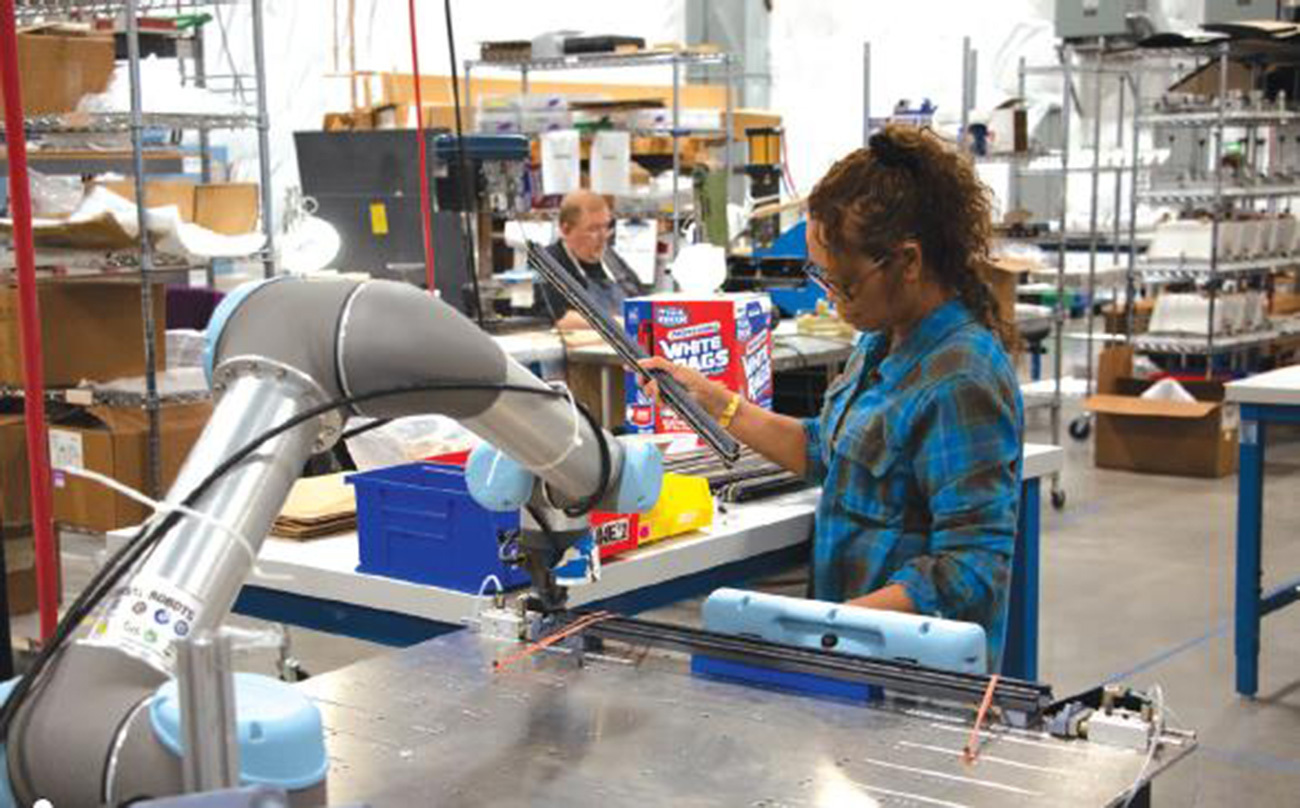
Figure 2: After conducting a risk assessment, aerospace manufacturer Tool Gauge deployed the UR5 collaborative robot in plastic assembly and dispensing applications to enable human-robot collaboration. The collaborative robot’s force-limiting safety system ensures that it automatically stops operating when it encounters an obstacle.
01 Implementation Methods for Collaborative Robots
Thanks to their ease of use and small footprint, collaborative robots are ideally suited for do-it-yourself implementation. If your application scenario is straightforward—such as pick-and-place operations—your company should feel confident in its ability to carry out the implementation itself. DIY deployment is significantly cheaper than deployments that require the involvement of integration specialists, making it an even more attractive option for small companies with limited automation budgets.
The educational resources provided by different collaborative robot manufacturers vary in both quantity and quality. In particular, for those with little or no prior experience in robotics, it’s crucial to select a collaborative robot brand that offers online training, educational materials, and support—resources that can help you successfully deploy and implement collaborative robots.
For more complex applications—or for any other reason—some companies lack the capability to carry out full-scale deployments. As a result, these companies need to choose among three types of integrators: a. Value-added distributors, which are typically the most affordable option. They can provide technical support to facilitate sales and recommend appropriate configurations and peripheral equipment. b. Lean integrators, who usually specialize in specific applications (such as welding or surface treatment) and calculate integration time in weeks. c. Traditional system integrators, who can build a collaborative-robot-based installation from scratch, integrating all peripherals and hardware into a turnkey solution. Traditional integrators measure delivery times in months; while this integration process is more expensive, it is also more comprehensive.
02 Identify risk factors
Each application is different and faces unique challenges. Some risks are inherent to the process itself—for example, arc welding. Other risks may arise from added complexities, such as when a vision system is integrated into a collaborative robot setup. Environmental factors can also pose risks, particularly humidity and temperature. Additionally, factors that affect equipment longevity—including how closely the collaborative robot operates near its maximum payload—play a role. We recommend requesting an application risk scorecard from the collaborative robot manufacturer; this scorecard will help you conduct an informed assessment of these various factors.
03 Conduct a risk assessment
Risk assessment is an essential component of the collaborative robot deployment process. For guidance on conducting risk assessments, you can visit the A3 Robotics robotics website, which offers a wealth of robotics safety resources and training. Additionally, the EU-funded COVR project recently released a free digital toolkit that provides information and guidance on risk assessment, case studies, safety directives, international standards, and best practices for collaborative robot safety.
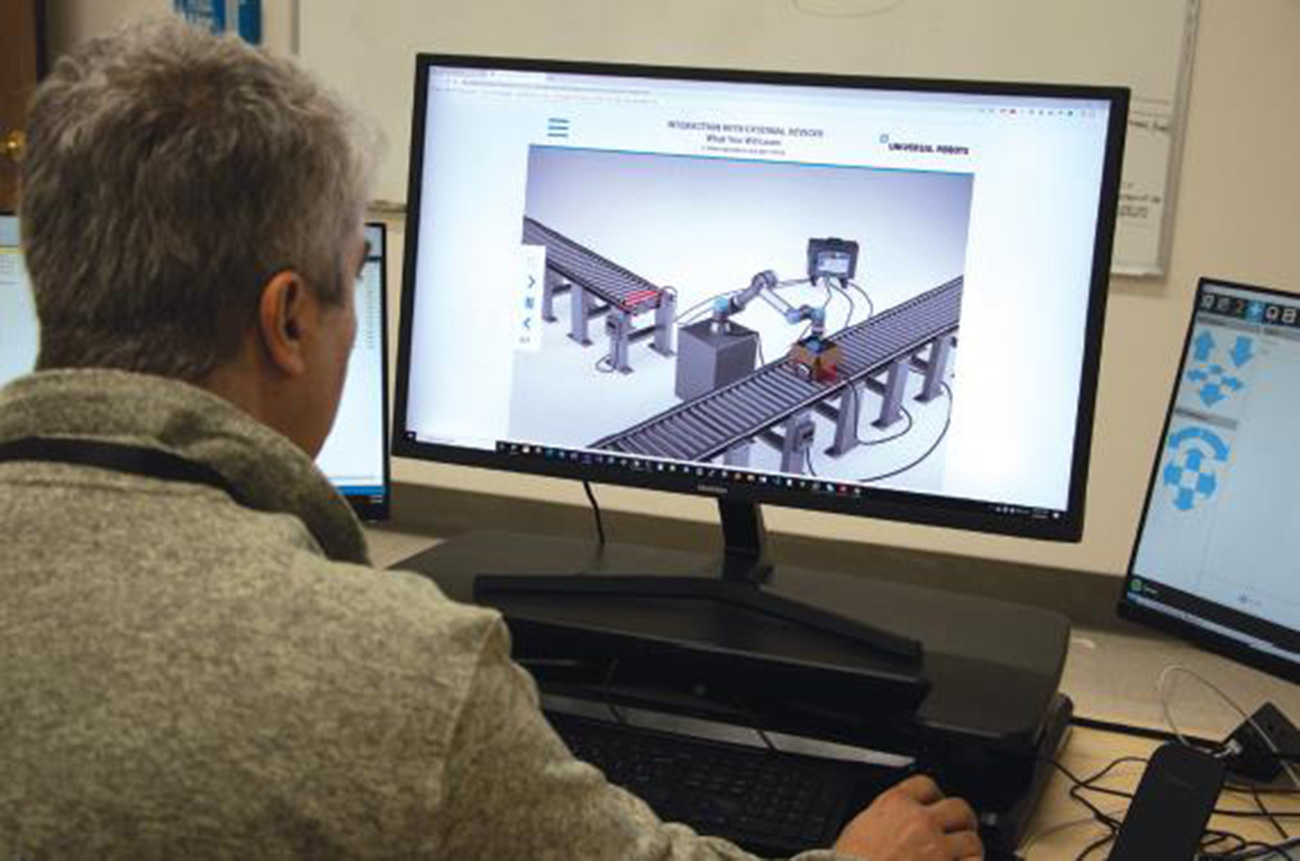
Figure 3: To learn more about UR robot setup and programming, DCL Logistics’ engineering team completed free online training and free application simulation at the Universal Robots Academy.
04 Develop a detailed investment assessment
The business cases for collaborative robots are compelling, yet when making automation investments, many executives require detailed return-on-investment (ROI) information. We urge collaborative robot suppliers to provide ROI worksheets and instructions explaining how to calculate the total benefits of a collaborative robot installation.
The true value of ROI goes beyond just labor costs. It also encompasses Overall Equipment Effectiveness (OEE) and Overall Labor Effectiveness (OLE). The former measures how effectively equipment is utilized during its scheduled operating time and its maximum potential, while the latter determines how a company deploys its highest-performing employees, adjusting based on variables such as availability, output, and quality.
05 Rapidly Enhance Operator Skills
The first step to ensuring that existing employees can easily upgrade to become collaborative robot operators is to select a collaborative robot that’s highly user-friendly. If the collaborative robot can be programmed effortlessly via a teach pendant, smartphone, or tablet, one of the major barriers to successful skills enhancement can be quickly removed.
Next, select a collaborative robot expert to support this technology. Given the “surprises” that collaborative robots bring, the challenge here may not be finding a “champion” for collaborative robots—but rather choosing several enthusiastic candidates for this role.
Look for collaborative robot suppliers that can provide education and training resources. This will help streamline the training process and reduce implementation time. Quality is also crucial, so be sure to seek out comprehensive collaborative robot training programs—especially those that offer industry-recognized certifications.
06 Choose the right accessories for your application
Collaborative robots are platforms capable of handling a wide range of applications—from precise inspection tasks to heavy-duty palletizing operations. However, to fully realize the potential of such systems, they must be paired with a certain type of end-of-arm tooling. Not all collaborative robots are created equal. Before making an investment, conduct thorough due diligence to ensure you’re opting for a plug-and-play collaborative robot that’s certified and compatible with the widest variety of end-of-arm tools, hardware, and software peripherals. Look for brands that not only understand how collaborative robots can be deployed in different application-specific scenarios but also provide comprehensive application toolkits—as well as all the necessary software and hardware required to get started on specific tasks.
07 Conduct research on collaborative robots
There’s a wealth of information available online about collaborative robots, but the biggest challenge is how to search for them accurately. Real-world application case studies are an excellent resource for finding information on the deployment and use of collaborative robots. White papers can help focus attention on specific applications, topics, or industries. In recent years, as many new entrants have entered the collaborative robot manufacturing market, it’s increasingly important to concentrate on information about companies with a solid track record in this field. Some noteworthy sources of information on collaborative robots include TÜV Rheinland, A3, and the EU-funded COVR project.
Author: Joe Campbell, Universal Robots
Source: Control Engineering Network
Any information sourced from other media outlets is reprinted from those sources and does not necessarily reflect the views of this website. The purpose of reprinting this article is to provide additional information. If there are errors in the source attribution or if your legitimate rights and interests have been infringed upon, please contact us, and we will promptly correct or remove the content. Thank you.


Contact Us
Address : No. 18 Xiangtai Road, Liuyang Economic and Technological Development Zone, Building A5, Changsha E Center.China
Phone : +86-400-002-1378
Email : business@chnsnm.com
Sales : +86-173-7371-3251 (Mr. Zeng)

Here is placeholder text for Heading 1 h1.
Service Hotline
Address: Building A5, Changsha E Center, No. 18 Xiangtai Road, Liuyang Economic and Technological Development Zone.China